


BRICS at 20: A New Decade of Cooperation

-
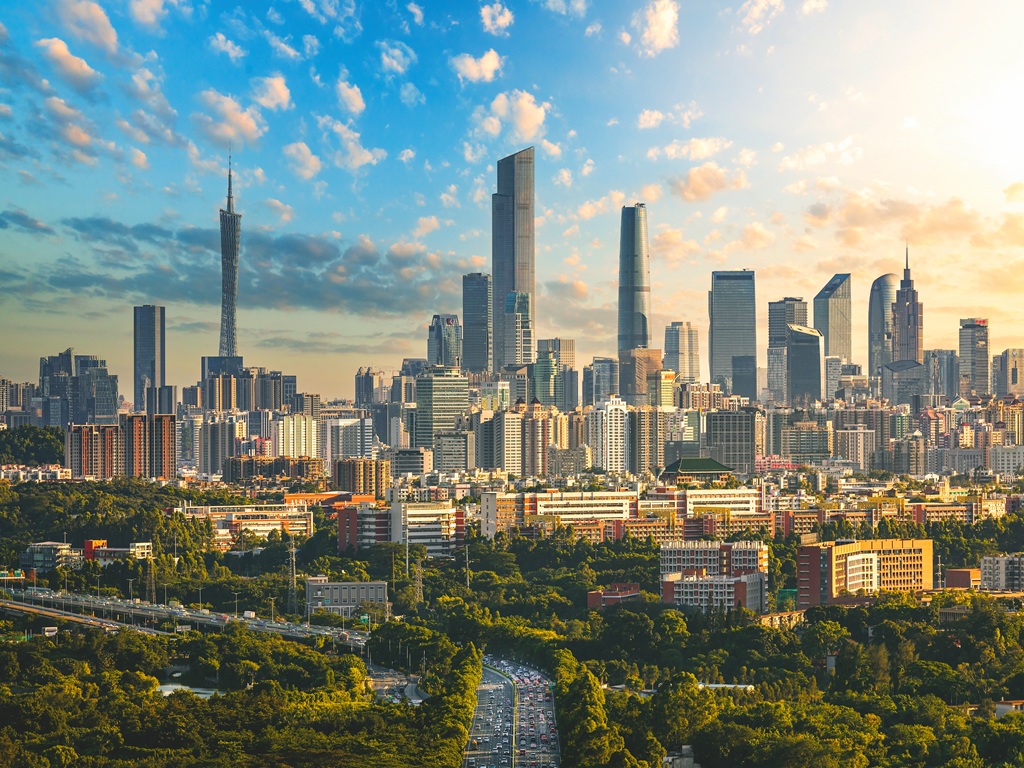
China moves swiftly to stabilize markets amid global financial turbulence
In a time of heightened uncertainty in the global trade environment and dramatic fluctuations in international financial markets, the timely and decisive action of China's state capital will effectively guide market expectations and mitigate the impact of external shocks.
2025-04-09
-

China to work with EU to promote sound, steady development of relations -- Premier Li
Protectionism leads nowhere, and only openness and cooperation represent the right path for mankind.
2025-04-09
-

Practical progress in bilateral ties urged
The talks came close on the heels of the meeting between President Xi Jinping and Indian Prime Minister Narendra Modi in Kazan, Russia, held less than a month ago. The meeting was described by Wang as a restart of bilateral ties.
2024-11-21
-
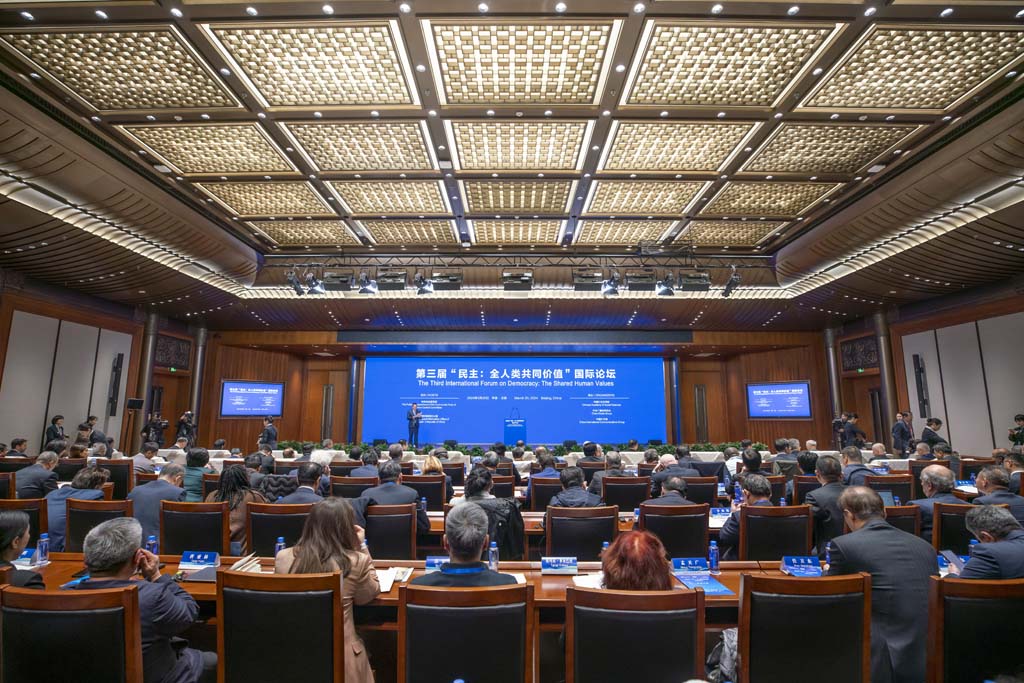
Beijing Hosts the Third International Forum on Democracy
The third International Forum on Democracy: The Shared Human Values, kicked off in Beijing on Wednesday. Over 200 guests from various countries, regions, and international organizations engaged in discussions to explore the essence of democracy and paths for mutual learning.
2024-03-20


By Rajiv Bhatia
The 18th BRICS Summit, scheduled to be held in New Delhi on September 12 and 13, will mark two decades since this plurilateral forum was first organized. It is an informal institution with great influence in the world. What began as a grouping of four countries has expanded into a large family of 11 member states and 10 partner states today. More than 30 countries have expressed interest in joining the BRICS family.
So has it actually been the hugely successful project that such data would suggest? Or do the critics and skeptics have a case that BRICS is mostly just talk?
The reality is more complex and nuanced.
Clearly, if the leaders of BRICS member and partner countries believed that BRICS was not a useful forum, they would not attend the Delhi Summit, nor would any of the other invited leaders. But considering that a likely majority of these nations and entities will be represented at the highest level, their presence and proactive participation indicate confidence in the utility and value of what BRICS has achieved so far. This also shows a commitment to helping it realize its potential.
Greater Influence
BRICS has emerged as one of the most important forums for the Global South, resolved to define and advance a multi-dimensional agenda covering reform of international governance, sustainable development, increased financing for development, and promotion of a fairer world. A broad consensus among international watchers holds that BRICS acts as a counterweight to the G7, representing the perspectives and interests of emerging markets and developing countries (EMDCs) and serving as a vital player in the G20.
At their meeting in May 2026, the BRICS foreign ministers agreed that the forum continued to play a pivotal role in raising the concerns and priorities of the Global South as well as in promoting a more just, sustainable, inclusive, representative, and stable international order based on international law.
As the chair of the 2026 BRICS gathering, India, a founding member, is not only conscious of its responsibilities but committed to strengthening the forum. Having assumed the BRICS presidency in 2012, 2016, and 2021, India recognizes its fourth opportunity as coming at the most challenging time considering the ongoing major conflicts in Ukraine and the Middle East. Hence, it is important to manage complex geopolitics in a prudent manner to navigate the BRICS ship through deep fissures, friction, and tensions through focusing on intra-BRICS cooperation in diverse sectors. Observers hope the grouping will be able to emerge as a stronger and motivated player on the world stage thanks to efforts from all members.

The BRICS 2026 logo is seen in New Delhi, India, September 10, 2026, ahead of the 18th BRICS Summit.
Towards a More Cohesive BRICS
Beyond geopolitics, India’s BRICS chairship has also placed emphasis on deepening intra-BRICS cooperation. Its stated overarching theme for this session is “Building for Resilience, Innovation, Cooperation and Sustainability.” Over 350 events and meetings have already been held involving ministers, think tanks, civil societies, business, youth, and other stakeholders. A preview of what the New Delhi summit this year could achieve can come in two different ways.
First, it will review the major gains of the previous three BRICS summits. The Johannesburg summit in 2023 portrayed BRICS as a partnership for “inclusive multilateralism,” committed to fostering a global environment of peace and development. It succeeded in resolving the vexing issue of BRICS membership expansion.
The Kazan summit in 2024 highlighted the virtues of multipolarity and multilateralism, with the former expanding opportunities for the EMDCs, and the latter presented as an instrument to secure a more agile and responsive global system. Russia’s BRICS presidency helped evolve consensus on new partner countries. The Rio de Janeiro summit in 2025 voiced serious concern over the prevailing polarization and fragmentation among states. It also advanced implementation of the Strategy for BRICS Economic Partnership.
Second, meetings hosted since January 2026 reflect a comprehensive and inclusive approach on all dimensions of the BRICS agenda. A quick recall of some of the key deliberations and their outcomes at the ministerial level provides useful clues. Environment ministers, for example, agreed that the interlinked challenges of climate change, biodiversity loss, and land degradation demand urgent enhanced international cooperation. Culture ministers emphasized culture’s empowering role as a driver of sustainable development and agreed to create a platform for cooperation involving cultural and creative industries. Education ministers sought ways to strengthen early childhood care and education as well as foundational literacy and numeracy. Trade ministers did not issue a joint declaration but reaffirmed the commitment to promoting a fair, open, and rules-based trading system, with a well-functioning World Trade Organization at its core.
The BRICS Think Tanks Council presented a set of recommendations following its detailed deliberations in Lucknow on August 25. They have identified practical pathways to build economic and climate resilience, deepen cooperation on innovation and technology, advance sustainable development, and support a more inclusive and effective multilateral system.
In the days leading up to the New Delhi summit, two observations have become particularly relevant: First, BRICS has struck a sound balance between expanding its family and creating greater cohesion within it. Hence, greater emphasis should be placed on deepening cooperation among the existing BRICS members for at least the next three years. This process needs to be nurtured carefully and continuously. Second, a critical requirement to ensure the continuing success of BRICS is strengthening coordination and convergence among its members, especially among the founding members. They may not agree on every issue, but they must work together closely to expand the arc of agreement and demonstrate mutual sensitivity where they disagree.
This is the path to BRICS becoming a stronger player in the international arena. China, which will assume the presidency of BRICS in 2027, can advance BRICS cooperation and cohesion even further.
The author is a distinguished fellow at Gateway House, a Mumbai-based foreign policy think tank. A former diplomat, he served as the Indian ambassador to several countries and is the author of three books on India’s foreign policy.